

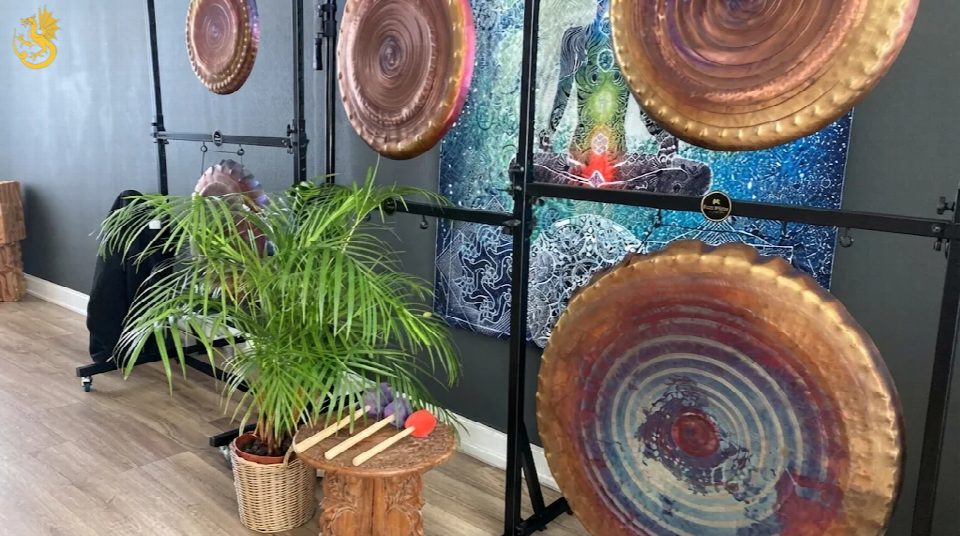
Discover a proposed Welsh peace gong inspired by the Mabinogi and the Deiseb Heddwch, the Welsh Women’s Peace Petition from 1923–24. This initiative merges storytelling, artistry, and a commitment to peace in public life.
Exploring the Mabinogi, Concepts of Peace, and the Importance of the Deiseb Heddwch
Investigating the Blend of Stone and Metal in Artistic Expression
History resonates through various forms. It lives in the texture of timber, the exquisite slate from Welsh quarries, and the rich sounds produced by skilled metalwork.
For Sarah Ward and her husband Ashley, this resonance marks the commencement of a groundbreaking project: a Welsh peace gong adorned with imagery from the Mabinogi, designed for public marches and community gatherings.
Developed through their efforts at Awen Sounds, this instrument aims to intertwine storytelling with craftsmanship, echoing the sentiments of the Welsh Women’s Peace Petition of 1923–24, known as the Deiseb Heddwch.
These legacies represent distinct yet interconnected heritages. The Mabinogi tells stories of courtesy, conflict, sorrow, and the exercise of power.
Conversely, the petition chronicles the united efforts of women advocating for peace on an international scale. The gong aspires to draw inspiration from both traditions, acknowledging that medieval narratives and contemporary activism do not always align perfectly.
This gong serves both a practical and symbolic purpose: it is a portable object intended for gathering, listening, and reflection. The etched images provide visual engagement, while the sound acts as a cue for contemplation during community events.
The familial connections add unique significance to this project within House of Rhodri. Sarah is the author’s niece, infusing a personal dimension into the project’s lineage.
Her involvement links the preservation of family history to a dynamic creative response to the narratives and responsibilities inherited from previous generations.
Understanding the Mabinogi: How the Four Branches Relate to Peace
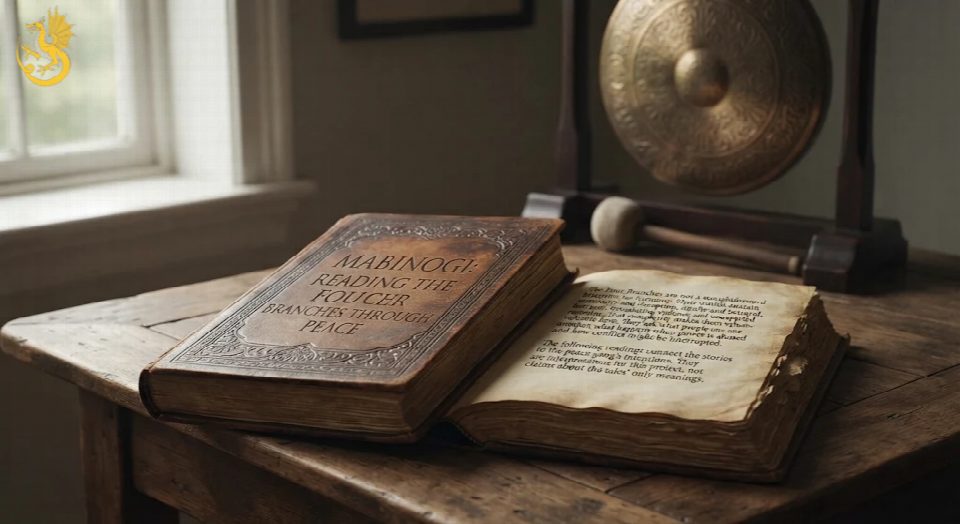
The Four Branches do not provide a simplistic formula for harmony. Their stories encompass themes of generosity and deceit, loyalty and betrayal, brutal violence, and unexpected restraint. This complexity enhances their relevance in today’s context.
They raise vital questions about our responsibilities towards one another, the repercussions of misused power, and the potential to disrupt cycles of conflict.
The interpretations that follow link these narratives to the intentions behind the peace gong, offering insights for this project rather than definitive interpretations of the stories.
The First Branch: Pwyll, Prince of Dyfed
A pivotal moment in the First Branch begins with a failed pursuit. Pwyll sees Rhiannon riding by, yet neither he nor his attendants can catch her. Despite their fervent attempts, they remain far behind.
Eventually, Pwyll calls out to her, requesting that she stop. She agrees.
This encounter signifies a profound behavioural change: a relationship begins when pursuit transforms into a respectful request for engagement.
Pwyll does not require a faster horse; he must engage Rhiannon in conversation, and she must choose to respond.
While the broader narrative contains elements of violence and manipulation, this moment exemplifies how courtesy can achieve what force and speed cannot.
This serves as a point of reflection for the proposed instrument: peace may depend not only on individual determination but also on how one approaches others.
The Second Branch: Branwen, Daughter of Llyr
The Second Branch addresses the severe consequences of war between Britain and Ireland. Insults, mistreatment, and retaliatory acts escalate into devastation, leaving few survivors.
Branwen’s tragedy personalises the impact of conflict: the losses are deeply felt by individuals whose relationships cross the boundaries where violence erupts.
After the fighting, the surviving companions spend seven years feasting at Harlech, listening to the birds of Rhiannon.
In other tales within the Mabinogion, particularly in Culhwch and Olwen, these birds are said to possess the power to awaken the dead and soothe the living to sleep.
Within the context of the peace gong, these birds symbolise a sound that transforms the listener’s experience. Their song evokes memory, respite, and the ability to focus on matters beyond the immediate pressures of conflict.
This perspective does not diminish the sorrow inherent in the branch. The birds cannot undo the devastation that has occurred.
Their existence in the aftermath allows both restoration and loss to coexist, rather than offering a simplistic promise that harmony rectifies everything.
The Third Branch: Manawydan, Son of Llyr
Manawydan’s tale highlights the importance of craftsmanship. Confronted with an enchanted and barren land, he turns to trade and creativity.
When his success triggers hostility, he continually opts for progress rather than accepting Pryderi’s challenge to combat.
His patience resonates with the purpose of the gong. Skill fosters continuity, while restraint helps prevent disputes from escalating into further violence.
Craftsmanship alone does not dissolve the enchantment. Manawydan gains leverage by threatening to hang a captured mouse, revealed to be the enchanter’s wife.
This bargaining secures the release of his companions and lifts the enchantment over Dyfed.
This narrative does not provide a straightforward moral of peaceful persuasion. Its resolution involves pressure, demands, and carefully negotiated agreements.
The significance of this complexity lies in recognising that resolving conflict may require more than goodwill; the conditions of a settlement deserve as much scrutiny as the desire to achieve one.
The Fourth Branch: Math, Son of Mathonwy
The Fourth Branch starkly highlights the abuse of power. Its betrayals and transformations raise essential questions about treating individuals as mere instruments of another’s will.
For Sarah and Ashley’s initiative, the transformations involving Blodeuwedd and Lleu Llaw Gyffes also invite reflection on humanity’s connection with the natural world.
Human aspirations are pursued through bodies, creatures, and materials that become intertwined in the struggle for control.
This ecological perspective aligns with this contemporary endeavour rather than serving as a definitive lesson from the tale. It raises questions about the meaning of responsibility when the consequences of one’s actions extend beyond the individual making the choices.
Collectively, the Four Branches equip the gong with a visual vocabulary that embodies both hope and discomfort. Their significance lies not in presenting peace as uncomplicated but in illustrating why it is a challenging pursuit.
Honouring the Legacy of the Deiseb Heddwch
While the Mabinogi provides narratives for contemplation, the Welsh Women’s Peace Petition represents a structured movement aimed at initiating change.
In 1923, women across Wales gathered an extraordinary 390,296 signatures for a plea directed at the women of the United States.
Their request was both ambitious and specific: they implored American women to advocate for their government to join the League of Nations and endorse international cooperation as a means to avert warfare.
In 1924, Annie Hughes-Griffiths, Mary Ellis, Elined Prys, and Gladys Thomas delivered the petition to America, with its signatures enclosed in an oak chest.
The chest symbolised a collective appeal. Each signature belonged to an individual, yet collectively they formed a substantial request that could traverse the ocean and be presented to others.
For our family, the Deiseb Heddwch also holds a personal connection. Among its signatories were Sarah Davies of Glasgoed, Rhydlewis, and her youngest daughter, Greta (Margretta) Davies, who signed directly beneath her mother.
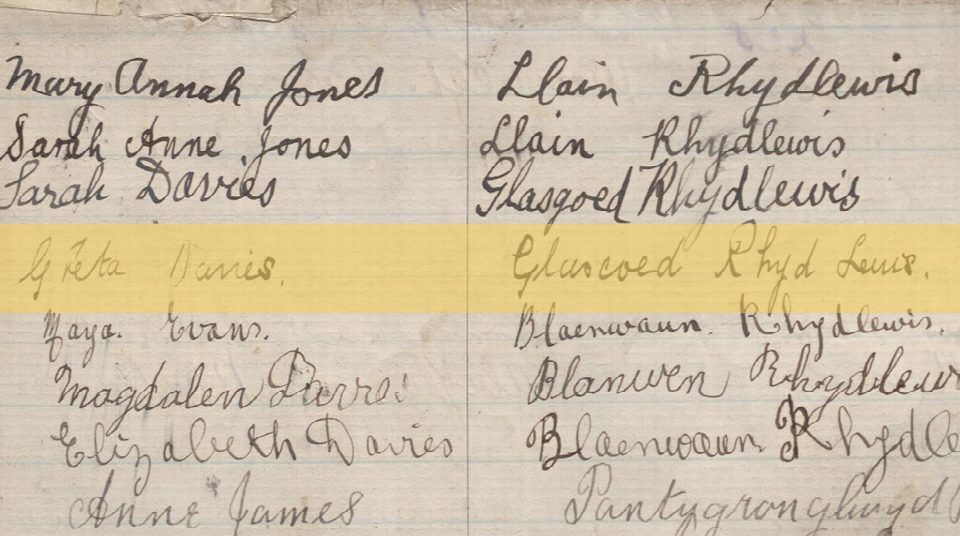
Their signatures link two generations of our family to this broader movement for peace, bringing the history of the petition closer to home.
Remembering Aunty Getta
In our family narrative, Greta (Margretta), the youngest daughter, is lovingly remembered as Aunty Getta. Gillian recalls visiting her at Glasgoed during childhood:
“We used to visit her when we were little. Aunty Getta. I remember quite a bit about those visits. Lynne and I were quite mischievous and would take her blue tablets, which she used for whitening clothes, and swish them in the stream beside the house, wasting them!”
The envisioned gong draws inspiration from the interplay between conviction and public action. It will not aim to replicate the petition or claim to represent every woman who supported it.
Instead, it seeks to honour their efforts by creating a new focal point around which people can gather and express their commitment to peace.
Forging Sheet Metal into a Public Symbol of Sound
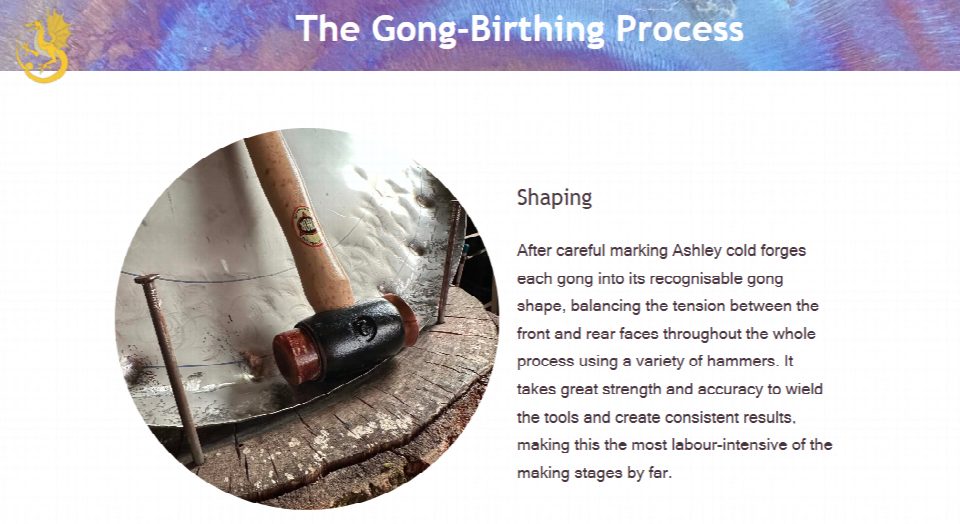
At Awen Sounds, the creation process begins with sheet metal, which is hand-forged into a unique instrument. Each strike shapes its form and influences its sound. The surface is then etched and fired outdoors to achieve a distinctive colouration.
For the proposed peace gong, this process integrates imagery and sound into a cohesive object. The stories do not remain confined to text; their representations can resonate in streets, squares, and community events.
A gong serves as a focal point for gatherings. Its sound can signal the beginning, accompany public declarations, or invite moments of silence.
Responses may vary, yet all will encounter the same invitation to pause and reflect.
This is a modern application, not a recreation of an ancient Welsh ceremony.
Its connections to the past arise from the chosen stories, the petition remembered, and the intentions of those who craft and carry it.
A New Instrument for the Ongoing Journey Towards Peace
Sarah and Ashley’s proposal revitalises ancient narratives for a purpose that remains critically unfinished. Courtesy does not resolve all conflicts.
Restraint does not eliminate all injustices. Even a meticulously negotiated settlement cannot undo all that has transpired.
The gong’s significance does not rely on the promise of resolution.
Its connection to the Mabinogi is cultural and literary, rather than a claim of descent from legendary figures.
Its link to the petition signifies an act of remembrance and response, not an assertion of authority to represent the women who endorsed it.
When struck, it will not declare that peace has been achieved. Instead, it will invite those present to listen and contemplate their next actions.
References and Additional Reading
This article synthesises literary and historical sources alongside details about a contemporary creative endeavour.
The interpretations of the Mabinogi, through themes of peace, responsibility, and humanity’s connection with nature, are insights offered for this project rather than assertions about the stories’ exclusive or original meanings.
The Mabinogi and the Greater Mabinogion
- The Mabinogion, translated by Lady Charlotte Guest: Project Gutenberg. A freely accessible historical English translation containing the Four Branches and Culhwch and Olwen, rendered here as Kilhwch and Olwen.
Relevant excerpts can be found in “Pwyll Prince of Dyved,” “Branwen the Daughter of Llyr,” “Manawyddan the Son of Llyr,” “Math the Son of Mathonwy,” and “Kilhwch and Olwen.” Variations in spelling and wording exist across translations.
- Manawydan fab Llyr: The Third Branch of the Mabinogi, Mabinogi.net. An English translation with explanatory notes, including episodes related to saddle-making, shield-making, and shoemaking, as well as the negotiations leading to the release of Rhiannon and Pryderi and the lifting of the enchantment over Dyfed.
The Four Branches of the Mabinogi should be distinguished from the broader collection commonly referred to as the Mabinogion.
The birds of Rhiannon feature in the Second Branch, while the explicit description of their ability to awaken the dead and soothe the living to rest appears within Culhwch and Olwen.
The Welsh Women’s Peace Petition
-
The Welsh Women’s Peace Petition: National Library of Wales. Historical context regarding the petition, which amassed 390,296 signatures, the oak chest, and the delegation of Annie Hughes-Griffiths, Mary Ellis, Elined Prys, and Gladys Thomas.
-
The Welsh Women’s Peace Petition: Search the Signatories. The National Library of Wales’s dedicated platform for exploring the petition and its signatories.
-
“Inspired by Annie”: The Story of the 1923 Welsh Women’s Peace Petition to America, Welsh Centre for International Affairs. Further context on the campaign, its organisation, and its aspirations for international peace.
Modern Craft and Family Connections
- Awen Sounds: Handcrafted Gongs, Made in Wales. An overview of the makers’ practices, describing gongs cold-forged by hand from sheet metal, etched, and fired outdoors to develop their unique colouration.
This provides insight into their general crafting process, rather than a technical specification for the proposed peace gong.
- House of Rhodri: Welsh Family History. The family-history context from which this article arises. The Mabinogi is employed as a literary and cultural reference, not as genealogical evidence.
Project Insights
Details regarding the conception, intended imagery, and planned public use of the proposed peace gong were shared with the author by Sarah Ward and her husband, Ashley, via personal communication on 7 November 2026.
Sarah is the author’s niece, a supporter of House of Rhodri, and a documented member of the project’s family lineage.
This relationship provides the personal context for the article; the published sources cited above support its literary, historical, and general craft background.
Further family-history material is accessible in the House of Rhodri Archive, available for a modest subscription fee.
The post Welsh Peace Gong: Exploring the Mabinogi and Heddwch appeared first on Limits Of Strategy.