

Have you noticed water pooling on the bathroom floor outside your shower? You may see cracked or discoloured grout lines, and a persistent musty odour clings to the air despite your diligent cleaning. Perhaps you’ve even noticed the paint on the wall opposite the shower bubbling or the timber door frame swelling due to excess moisture.
It’s tempting to think that a pipe has burst behind the wall. in many cases, water seeps through damaged grout and worn silicone. A simple regrouting and resealing can efficiently tackle that leak without requiring any tiles to be removed.
This guide explains when regrouting your shower can effectively remedy a leak and when it might fall short. You’ll also learn about the regrouting process if you choose to collaborate with Leaking Showers Sealed, including how long you should avoid using the shower afterwards. If you suspect that the grout is behind the problem, our dedicated shower regrouting page provides a comprehensive overview of our services in North Richmond, the Hills District, and the North Shore.
Can Regrouting Effectively Stop My Shower Leak?
- Regrouting can successfully halt leaks when water escapes through damaged grout or silicone.
- We remove the old grout and replace it with Ardex EG15 epoxy grout, which is non-porous, and reseal corners and junctions using Ardex neutral cure silicone.
- Your tiles remain intact, allowing you to repair a leaking shower without extensive renovations or tile removal.
- If the leak stems from a faulty pipe, drain, or tap, it’s essential to consult a plumber. A compromised membrane beneath the tiles will necessitate tile removal, meaning a regrout alone will not resolve these issues.
- It is recommended to wait at least 24 hours before using the shower again.
Contact Leaking Showers Sealed if you have observed mouldy grout, a damp smell, or water leaking around your shower.
The Significance of Shower Regrouting Explained
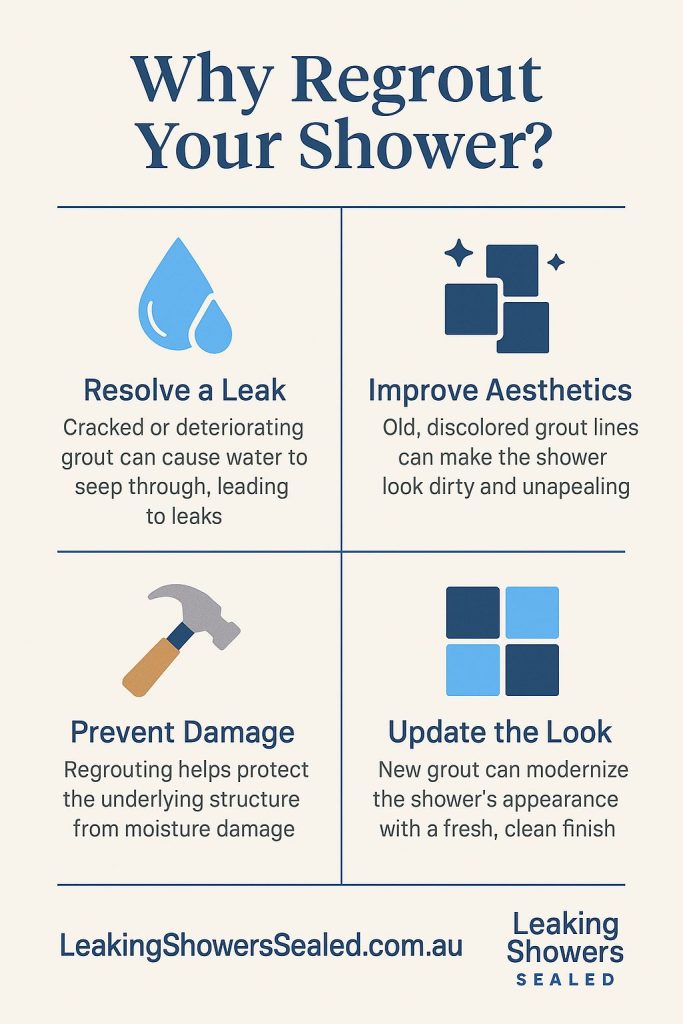
Shower regrouting involves removing old, cracked, or mouldy grout from between your shower tiles and applying new grout to restore the seal between the joints. At Leaking Showers Sealed, we use Ardex EG15 epoxy grout, which is non-porous and prevents water and mould from penetrating, unlike traditional cement grout.
Over time, grout deteriorates due to exposure to hot water, cleaning chemicals, and minor structural movements. This deterioration leads to cracks and pinholes that allow water to seep through the joints, even if the tiles appear intact. Often, this damage remains hidden as water collects behind the tiles and beneath the shower floor.
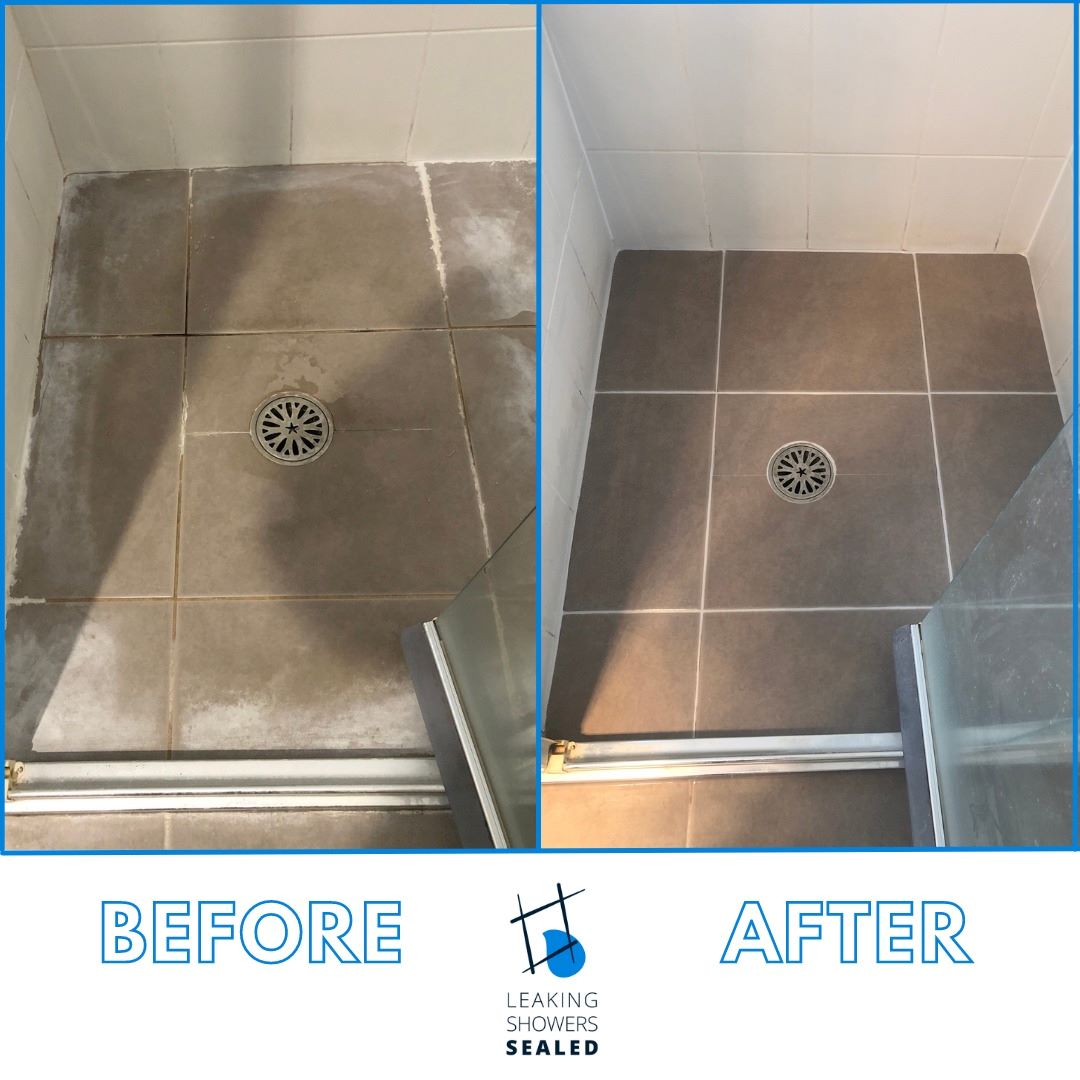
Regrouting restores these joints, making the shower watertight once again. It also removes unsightly stained grout lines that can make an otherwise clean bathroom look worn, all without the cost and disruption of a full renovation.
Will Regrouting My Shower Resolve the Leaks?
Regrouting effectively addresses leaks when water escapes through compromised grout or silicone, which are frequent causes of shower leaks. The first step is to identify the source of the water to determine if regrouting is the appropriate solution.
When Should You Opt for Regrouting and Resealing?
Regrouting and resealing is the ideal approach when you observe cracked, crumbling, missing grout, or mould that returns despite cleaning efforts. It is also effective if the silicone around corners and the shower base has split or come away. In these cases, the tiles remain intact, and the water is leaking through the joints.
When Is It Necessary to Call a Plumber Instead of Regrouting?
If the leak originates from a pipe within the wall, the shower drain, or a tap, regrouting will not solve the issue. We work alongside plumbers, and if our inspection uncovers a problem with a pipe, drain, or tap, we will provide a detailed explanation and refer you to a plumber for further assistance.
What If the Waterproofing Membrane Beneath the Tiles Is Damaged?
A waterproofing membrane is located behind the tiles and under the shower floor. Prolonged exposure to water through the grout can compromise this membrane. Replacing a failing membrane requires tile removal, categorising it as renovation work that we do not perform.
Andreas, who holds NSW licence 89111C, has expertise in waterproofing. Our team is trained to identify a compromised membrane. If we discover during our inspection that your shower requires more than just a regrout, we will inform you before proceeding with any work.
Addressing issues at the first signs of trouble helps protect the membrane. Fresh epoxy grout and new silicone create a barrier against water, making it crucial to address cracked grout before further damage occurs.
Recognising the Need for Shower Regrouting
Look out for these signs indicating your shower may be leaking through the grout and silicone:
- Cracked, loose, or missing grout between the tiles
- Mould that quickly reappears after cleaning
- Damp odours or visible moisture damage near the shower
- Water pooling outside the shower or leaking into adjacent areas
- Bubbling paint, discoloured walls, or soft floorboards
- Tiles that feel loose or sound hollow when tapped
If you notice any of these symptoms, it’s likely that the grout and silicone are no longer effectively retaining water within the shower. Tiles that sound hollow when tapped, known as drummy tiles, may need refixing before the shower can be resealed, and we check for these during our inspection.
What’s Involved in the Regrouting Process with Leaking Showers Sealed?
The regrouting process at Leaking Showers Sealed consists of five key steps, ensuring your tiles remain undisturbed throughout.
Step 1: Inspecting the Shower and Identifying the Leak Source
We conduct a thorough examination of the grout, silicone, tiles, and surrounding areas to pinpoint where the water is escaping. If our inspection reveals an issue with a pipe, drain, or tap, we will inform you before scheduling any regrouting.
Step 2: Removing Old Grout and Silicone
We carefully cut out the old grout and remove all existing silicone, including any layers applied over previous silicone. New grout cannot bond effectively to old grout, making it crucial to start with a clean surface.
Step 3: Meticulously Cleaning the Tiles and Exposed Joints
We ensure the tiles and empty joints are thoroughly cleaned to eliminate soap scum, dust, and mould, guaranteeing that the new grout adheres properly to a pristine surface.
Step 4: Applying Epoxy Grout to Regrout the Shower
We fill the joints with Ardex EG15 epoxy grout. For a shower base seal, we regrout the shower floor, the floor-to-wall junction, and the perimeter. For a complete shower seal, we also regrout every wall grout line.
Step 5: Resealing Corners, Junctions, and Tap Flanges
We apply Ardex ST neutral cure silicone to reseal internal corners and junctions. For a complete shower seal, we ensure the tap flanges are also sealed.
Typically, a shower base seal takes around 3 to 4 hours to complete, while a full shower seal for both walls and floor generally requires 4 to 5 hours. You must wait at least 24 hours before using the shower again to allow the grout and silicone to cure properly.
Can Regrouting Eliminate Mould in Showers?
Regrouting effectively removes mould that has penetrated the grout, as the mouldy grout is replaced. Surface cleaning with bleach or mould sprays only treats the outer layer, allowing mould to reappear since it resides within the grout where water becomes trapped. For more information on why shower grout becomes stained and damaged, please refer to our guide.
Can Regrouting Help You Avoid a Complete Bathroom Renovation?
For many homeowners, regrouting offers a practical solution to delay or avoid an extensive bathroom renovation. If the tiles are in good condition and the leak can be traced to the grout and silicone, a regrout and reseal will restore the shower’s watertight integrity. This approach also gives you more time to save for a future renovation.
A regrout, reseal, and thorough clean can also serve as an effective refresh before listing a home for sale or for landlords between tenant occupancies. Our article on regrouting a shower as a cost-effective renovation highlights how significantly a regrout can enhance a bathroom’s appearance.
Is DIY Regrouting a Shower a Viable Option?
While DIY grout kits are readily available in hardware stores, properly regrouting a shower is more complex than it seems. Without the necessary tools and expertise, you risk:
- Damaging or cracking tiles during the removal of old grout
- Leaving remnants of old grout in the joints, which prevents proper bonding of new grout
- Overlooking silicone joints, which are common sources of leaks
- Failing to identify a leak from a pipe or a compromised membrane
If you are uncertain about the source of the water, it’s wise to have the shower inspected before purchasing a DIY kit.
What Is the Cost of Shower Regrouting?
The cost of regrouting a shower varies based on several factors:
- Tile size, as smaller mosaics and 100mm tiles have more grout lines compared to larger 300mm or 600mm tiles
- The dimensions and layout of the shower, including features such as double showers, niches, and additional corners
- The condition of the grout and silicone, including issues like extensive mould, silicone layered over old silicone, or previous repairs needing removal
- Drummy or loose tiles that require refixing prior to resealing the shower
Regrouting is considerably more economical than a full bathroom renovation or retiling. For a cost estimate, please send photos of the shower floor, walls, and the complete shower to sales@leakingshowerssealed.com.au, or call 1300 815 512.
Common Questions About Shower Regrouting Answered
How long does the regrouting process take?
A shower base seal usually requires approximately 3 to 4 hours on site, while a complete shower seal for both walls and floor takes around 4 to 5 hours. Please allow at least 24 hours before using the shower again.
Will regrouting effectively stop a leak?
Yes, if the leak is due to damaged grout or silicone. Regrouting will not address leaks from a pipe, drain, or tap, which require a plumber, nor will it resolve a failed membrane, which necessitates tile removal.
How often should regrouting be performed?
The frequency of regrouting depends on the type of grout used, the bathroom’s ventilation, and the cleaning practices employed. Signs that indicate the need for regrouting include cracked grout, recurring mould, and persistent damp odours. Our article on how long shower regrouting lasts explains the factors that influence this.
Can new grout be applied over old grout?
No. New grout applied over existing grout will not bond correctly and will not resolve the leak. It is essential to remove all old grout before commencing the regrouting process.
Is regrouting covered by warranty?
Yes. A regrout and reseal includes a 10-year warranty on Ardex products and a 7-year workmanship warranty from Leaking Showers Sealed, contingent upon a site assessment.
Contact Us Today
1300 815 512
Why Choose Leaking Showers Sealed for Your Regrouting Needs?
- Since 2016, we have specialised in regrouting and resealing showers without removing tiles.
- We use Ardex EG15 epoxy grout and Ardex ST neutral cure silicone for outstanding results.
- Every regrout and reseal is backed by a 10-year warranty on Ardex products and a 7-year workmanship warranty, subject to site assessment.
- We have over 300 Google reviews across our three locations.
- Our services cover regrouting and resealing showers throughout North Richmond, the Hills District, and the North Shore of Sydney.
If your shower is leaking, do not hesitate to address the potential damage occurring behind the tiles. Send us photos of your shower or contact us to schedule an inspection. We will evaluate whether a regrout and reseal can effectively halt the leak.
Call Us Today
1300 815 512
Original Article First Published At: Regrouting a Shower to Fix Leaks: When a Regrout Stops the Leak and What to Expect from Leaking Showers Sealed
The Article: Regrouting a Shower: Stop Leaks and What to Expect first appeared on https://writebuff.com
The post Regrouting a Shower: Prevent Leaks and What to Anticipate appeared first on Limits Of Strategy.