

The Chronicles of Welsh Kings: A Narrative by Goldie the Grey. This engaging narrative unveils the intricate tapestry of Welsh dynastic history while directly contesting the version crafted by Geoffrey of Monmouth in his renowned work, The History of the Kings of Britain.
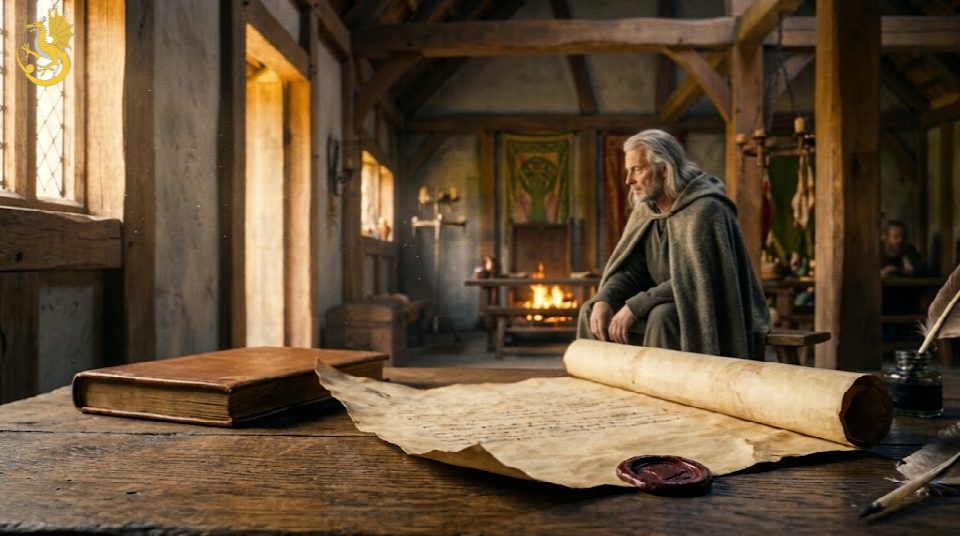
What Are the Two Distinct Deaths Experienced by a Monarch?
A monarch can face two significant types of death: the first occurs when their life comes to an end, while the second transpires when their name vanishes from the collective memory of their subjects.
The first death can happen through various means, such as falling in battle, succumbing to illness, drowning, or being murdered. The second death is determined by those who choose what aspects of history are deemed worthy of remembrance.
For Goldie the Grey, the narrative begins with this second death.
Long before the famed court of Camelot and the stories of valiant knights and grand romances, the rulers of Wales stood firm.
These were dynasties whose authority derived from bloodlines, strategic marriages, military victories, and the complex responsibilities of ruling a kingdom.
Mothers forged political alliances through marriage, while sons laid claim to perilous rights to the throne. Poets immortalised names that transcended the boundaries of a single lifetime.
This series centres on these historical figures. It explores the legacies of Welsh dynasties from 844 to 918, embarking on an imaginative journey into the identities and significances that Goldie believes endure beneath the Arthurian legends.
At the heart of this narrative lies a challenge to Geoffrey of Monmouth.
Geoffrey’s History of the Kings of Britain, penned in the twelfth century, lent substantial literary weight to the tale of Arthur. It embedded British rulers within a grand narrative of origins, conquests, glory, and decline.
The influence of Geoffrey’s work is profound: over 225 Latin manuscripts survive, with nearly 50 dating back to the twelfth century. Documented
His narrative not only reached audiences but also established the lens through which future generations would engage with Britain’s legendary past. Inferred
Goldie’s perspective is one of <a href="https://limitsofstrategy.com/kings-of-wales-a-journey-through-their-history/">betrayal</a>.
This accusation, which lacks a surviving confession, may not be universally accepted by historians. It encapsulates the viewpoint of the series’ narrator: a writer who drew upon British traditions yet adapted them in ways that obscured the dignity and enduring sovereignty of the Welsh.
This distinction is essential. We will not fabricate evidence to condemn Geoffrey. His documented methods, patrons, and narrative choices provide ample material for thorough examination.
We will not assume that every connection explored in these narratives represents established history. Where Goldie offers interpretation, he will clarify. Where records speak, we will listen. Where ambiguity exists, it will be acknowledged.
Geoffrey will not be granted the first voice simply due to the notoriety of his work.
How Did Geoffrey Utilise an Ancient Text to Build His Credibility?
Geoffrey provided his readers with a compelling justification for his insights. He claimed to be translating an ancient text in the British language, purportedly given to him by Walter, Archdeacon of Oxford. Documented
This assertion proved beneficial for a writer. Citing an ancient source suggested access to knowledge that was otherwise unattainable.
A British original conferred inherent authority upon the narrative. A Latin translation extended that presumed authority into the learned circles of ecclesiastics, courts, and chronicles. Inferred
The claimed source cannot be independently verified as the continuous ancient history that Geoffrey portrayed. Modern scholarship generally views the single-book explanation as a literary device rather than a thorough account of his methods.
Scholars identify a mix of identifiable Latin sources, genealogical traditions, prophetic texts, and creative construction. Documented
This does not imply that Geoffrey invented every name, event, or tradition. The more crucial question lies in how he utilised the material at his disposal.
A storyteller chooses the point of departure. A chronicler establishes the line of succession. Both make decisions about which relationships warrant explanation and which contradictions can be reconciled.
The accounts of the boy presented before the King serve as a particularly enlightening example. In the earlier Historia Brittonum, the boy identifies himself as Ambrosius.
Geoffrey adapts this narrative, introduces the identity of Merlin, and offers an alternative explanation for the boy’s conception. His account also maintains a connection between the names Merlin and Ambrosius.
These are documented characteristics of the texts and not independent validation that the events occurred as described. Documented
Here we can observe a tradition being reconstructed.
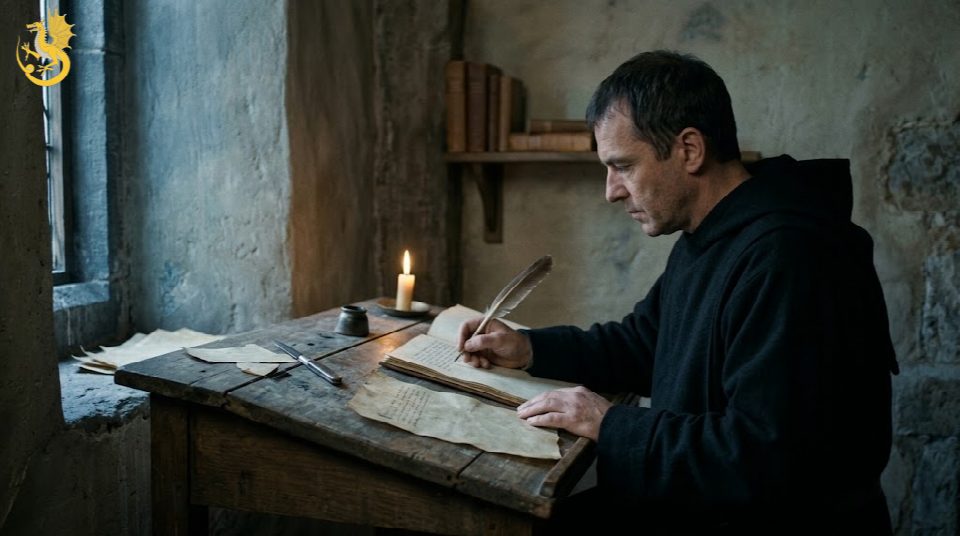
For Goldie, the peril does not lie in storytelling itself. Bards share tales, and communities preserve collective memory through narratives.
The remainder of this tale is reserved for supporters. Discover it on House of Rhodri.
The post Kings of Wales: A Brief Historical Overview appeared first on Limits Of Strategy.