
Last Updated on July 2, 2026 by David
How Can You Determine If Your Slate Floor Needs More Than Just Cleaning?
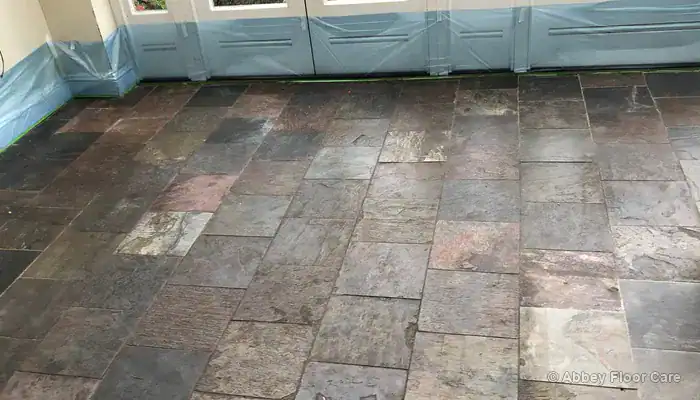
When your slate floor looks worn, dull, scratched, stained, or patchy despite regular cleaning, the issues are likely deeper than just surface dirt. Conventional mopping may remove surface soil but often misses underlying problems like uneven colour fading, leftover cleaning products, or minor surface damage that can accumulate over time.
Restoration of slate becomes essential when the floor does not respond uniformly to standard cleaning techniques. In high-traffic areas such as kitchens, hallways, boot rooms, or bathrooms, the floor may remain structurally sound yet show visible deterioration, signalling that its protective layer has diminished. Signs of distress include wear along frequently travelled paths or old treatments settling into lower areas, which fail to adequately safeguard the tiles.
What Causes Persistent Dullness on Your Slate Floor After Cleaning?
If your slate exhibits flat grey patches that remain even after thorough cleaning, the issue goes beyond surface dirt. The floor may appear worn due to a loss of its original depth in areas with heavy foot traffic, particularly where grit has been consistently ground in.
Dullness typically first appears around doorways, in front of sinks, near kitchen islands, and along main corridors connecting rooms. These worn areas may take on a chalky appearance, while less-trafficked spots retain a richer look due to reduced wear.
Colour fading in slate indicates a significant change in how the surface reflects light and maintains its tone. Homeowners often notice a decline in colour rather than prominent stains, which might lead them to resort to harsher cleaning methods. Initially, the floor may seem clean but lack vibrancy.
How Can You Spot Scratches and Marks Left by Foot Traffic?
If your slate shows fine scratches, dull trails, or light scuffed patches from regular foot traffic, these patterns reflect daily movement through the space. Shoes, pet claws, grit, and moved furniture can leave subtle marks that accumulate, resulting in an uneven appearance rather than just signs of wear.
Traffic wear can create an impression of neglect on an otherwise robust slate floor, even if the tiles remain structurally sound. Look for patterns forming in repetitive lines, arcs, or paths, as these often indicate varying levels of restoration needed compared to random markings.
Removing scratches from riven floors is limited by their inherent texture, as the goal is to maintain the surface character rather than flatten it. Fine-honed slate features a smooth, consistent surface that disperses light evenly, while an impregnating sealer preserves the natural riven texture, and a topical sealer adds a subtle shine.
How to Address Patchy Stains, Residue Buildup, and Ineffective Protection?
If your slate shows dark patches, white stains, paint residues, mineral deposits, or trapped contaminants after renovations, a thorough evaluation is essential before applying any sealer. Renovation debris can leave building materials stuck on the tile surface, resulting in a finished floor that may look worse post-sealing if surface preparation is inadequate.
Failed protection often reveals itself as uneven gloss, water marks, cloudy spots, or areas that darken more quickly than the surrounding floor. Hard water in UK homes can leave chalky white marks around wet areas, while excessive moisture during mopping can shorten the lifespan of the sealer when standing water is repeatedly left on the textured surface.
Discoloured grout can further contribute to the overall impression of neglect. Dirty water, detergent residues, and cloudy mop water can settle in grout joints, making the slate floor appear dirtier than it actually is, even if the tiles themselves merely require thorough deep cleaning and resealing.
How to Identify Old Coatings in Edges and Recessed Areas?
If your floor has darker edges, sticky spots, or patchy low-sheen areas, an accumulation of old coatings may be affecting the finish. Edge buildup typically occurs where previous products were applied excessively, where mops have pushed residue into the room’s corners, or where old acrylic coatings have settled in low-wear zones.
Visible sealer buildup occurs when topical excess collects in recessed areas, resulting in inconsistent finishes across the floor. Application residues can cause some tiles to appear shiny, others dull, and some to look dirty even after cleaning, leading to an overall blotchy appearance.
The presence of residue lock-in indicates that cleaning alone will not restore the floor. The surface may feel slightly sticky, appear cloudy under certain lighting, or show darker patches where furniture has been placed. This suggests that the old finish requires attention as part of the restoration process.
How to Recognise Minor Damage That Affects Restoration Strategy?
If your slate displays chips, small cracks, flaking edges, or open holes in honed-filled tiles, restoration is possible but requires more than just cleaning. Filler collapse refers to the breakdown of factory fillers in honed-filled tiles; homeowners will notice filler loss, exposing voids or small holes. The right approach involves removing the failed material before refilling and sealing.
Delamination indicates layer separation within the slate; homeowners will see flaking, lifting edges, or thin sheets breaking away. The solution involves stabilisation or replacement in areas where structural breakdown has occurred. Since slate forms in layers, this visible condition necessitates repair considerations rather than merely scrubbing harder.
Efflorescence appears as a white, chalky residue caused by mineral salts left after moisture evaporates. Homeowners will notice haze, pale deposits, or recurring white markings near grout or wet areas. The solution involves evaluating moisture levels, careful residue removal, and thorough drying before sealing. Hard-water mineral deposits can present similarly, so restoration decisions must rely on specific testing results.
Proper maintenance of the slate floor extends its lifespan by removing grit before wet mopping, using pH-neutral cleaning agents, and resealing at appropriate intervals. A professionally restored and properly sealed floor is significantly easier to maintain than one that is worn or improperly treated. Effective maintenance routines are discussed in how to clean slate floors when they appear dull. Avoid steam cleaning, as heat can soften protective layers, drive moisture into the surface, and lead to coating degradation on vulnerable floors.
How Can Improper Restoration Techniques Exacerbate Slate Damage?
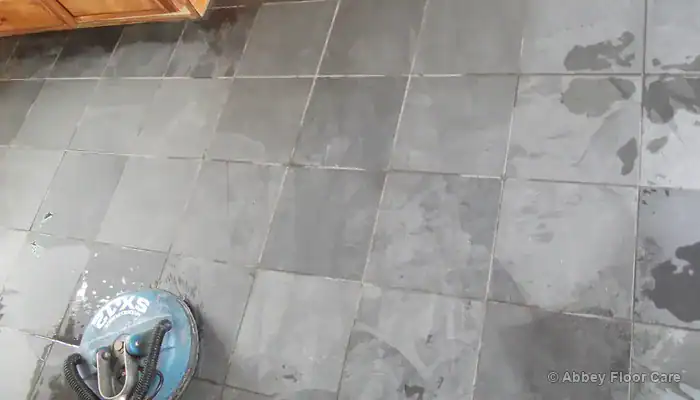
Rushing to strip, scrub, sand, or seal can turn a manageable slate issue into visible surface damage. Slate has a mineral structure that forms in layers, requiring evaluation of weak boundaries, cleavage separation, and flaking risks before implementing aggressive techniques. Problems with slate floors that show uneven fading highlight the importance of avoiding assumptions regarding colour loss and surface damage.
Always conduct tests on the floor first, as improper treatment can worsen slate damage.
Incorrect stripping methods can soften old coatings without fully removing them, allowing dissolved residues to seep into recessed areas. A solvent-based stripper works through solvent action, acrylic removal, wax dissolution, and controlled chemical penetration. Stripping coatings must be followed by effective residue removal to prevent re-adhesion to the surface.
What Do Professionals Require for Effective Slate Floor Restoration?
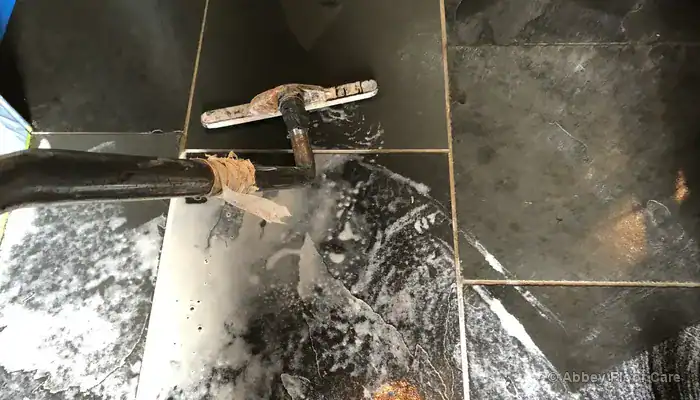
A wet vacuum or slurry extractor is not merely cleaning equipment; it plays a vital role in removing loosened soil, residue, and rinse water before they can dry back into the slate. Slurry extraction on a riven surface effectively controls residue removal, avoids redeposition, and manages contamination after agitation, making a wet vacuum essential in professional processes.
Professional preparation involves using appropriately matched tools rather than applying a single aggressive method across all types of floors. A low-speed rotary machine, polypropylene brushes, nylon detail brushes, microfiber cloths, repair materials, test sealers, and a solvent-based stripper are selected based on the floor’s existing coating, edge buildup, recessed areas, and dry condition.
Utilising the correct equipment ensures a consistent matte finish prior to sealing, as softened contamination is effectively eliminated rather than redistributed. Incomplete work can trap dirty solutions in the surface texture, while controlled extraction, thorough rinsing with fresh water, and drying checks simplify ongoing maintenance and prepare the restored floor for the appropriate protective sealant.
How to Determine the Correct Slate Restoration Process for Your Floor?
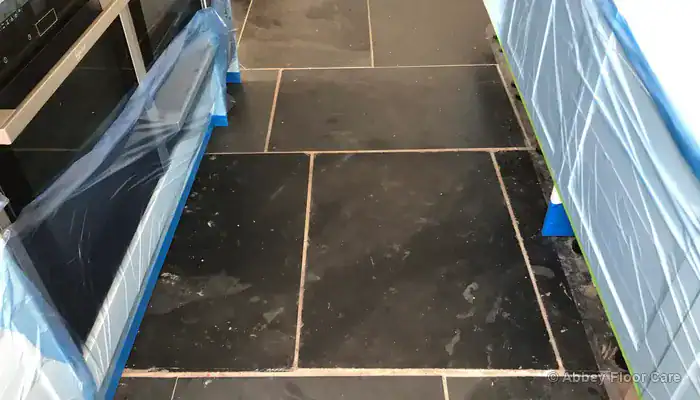
If one slate floor requires deep cleaning while another needs sealer removal, repair, honing, or sealing, the distinction lies in the floor’s condition rather than the type of stone. Professional evaluation shifts the focus from visible symptoms to the correct restoration method, ensuring the process adapts to the floor rather than forcing every tile through a uniform treatment.
Diagnostic assessments help differentiate surface preparation from more extensive corrections. Building residues, white staining, paint marks, mineral deposits, and trapped contaminants indicate renovation contamination and the need for controlled stain removal, while failed coatings suggest sealer removal, rinse management, and drying before applying any new finish.
- Check whether water beads up, soaks in, or darkens in high-traffic areas.
- Inspect edges, grout joints, and recessed textures for old coatings or residues.
- Test smaller areas before proceeding with stripping, repair filling, sealing, or aftercare planning.
- Align the restoration method with the desired outcome: matte finish, wet-look finish, or low surface sheen.
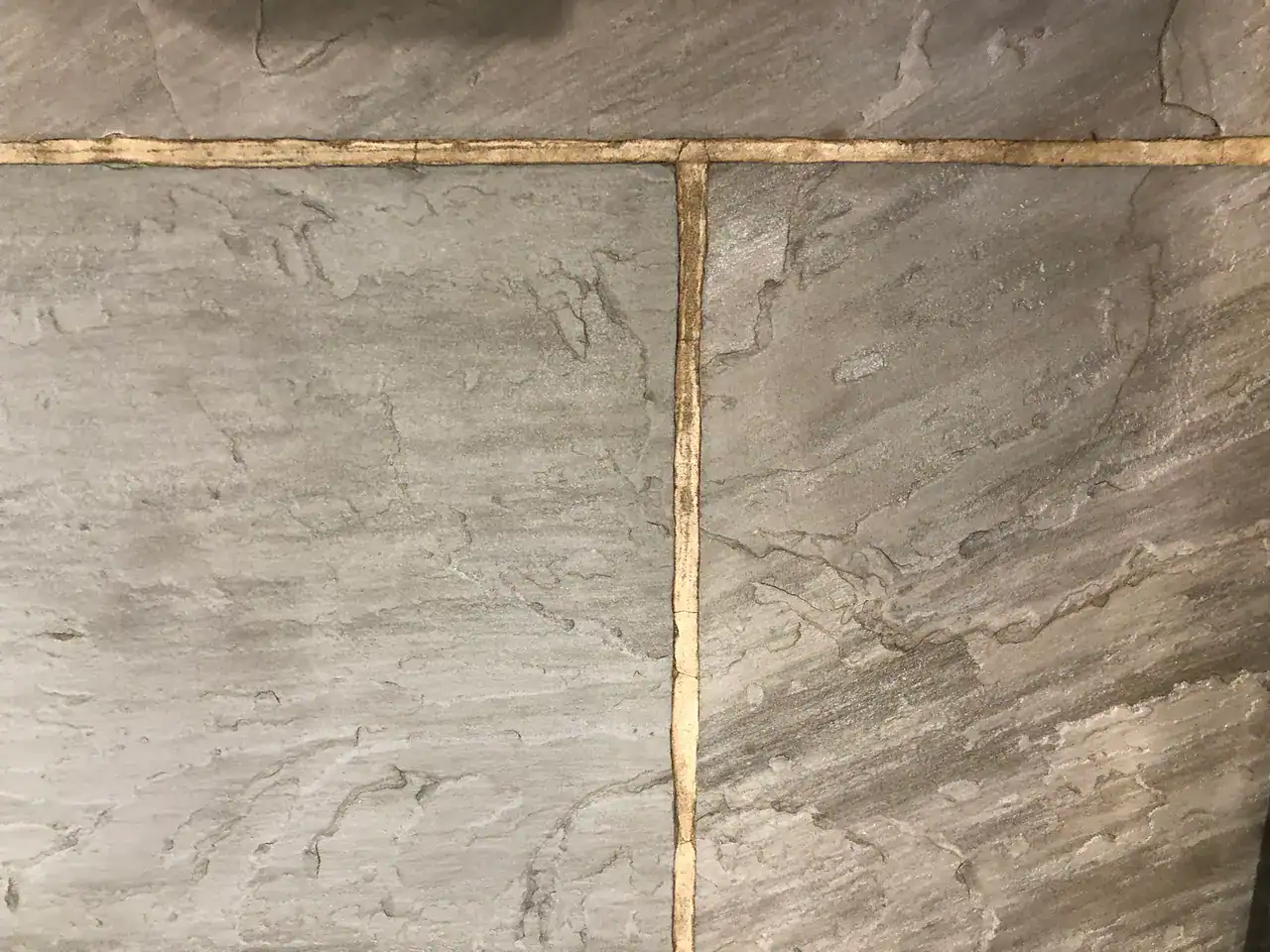
Planning the outcome helps protect the floor after intervention. A tailored maintenance handover includes pH-neutral cleaning, grit removal before wet mopping, and resealing intervals. Broader slate care is outlined in slate floors in UK homes. Proper restoration typically results in a significantly improved appearance compared to pre-intervention conditions, and in many cases, it will look better than when first installed, as the correct sealer enhances the stone’s natural colour.
What Next Steps Should You Take for Comprehensive Slate Floor Care?
Providing effective guidance for slate floor care allows readers to differentiate between restoration, cleaning, sealing, repairs, and long-term maintenance, empowering them to make informed decisions. A floor affected by old coatings, grout issues, tile replacements, aspirations for a wet-look finish, or concerns about water resistance may require multiple articles to arrive at the right conclusion.
Slate care is most effective when each topic is clearly defined. Restoration encompasses the entire corrective process, while routine cleaning, repair decisions, and sealing options necessitate specific details. The broader roadmap is available in complete slate floor care guidance. Ongoing maintenance is crucial for prolonging the lifespan of the floor, as pH-neutral cleaning, grit removal, and timely resealing help preserve the restored surface.
Recommended products for slate maintenance include cleaning solutions: Fila Pro Floor Cleaner, Lithofin Easy Care. Suggested equipment includes: Vileda H2PrO Spin Mop System.
BIO_PARAGRAPH: David Allen has been restoring slate floors across the UK for over 30 years with Abbey Floor Care, addressing challenges such as worn riven floors impacted by old coatings, traffic wear, and ineffective sealing. His approach to slate restoration emphasises thorough assessment, careful residue removal, appropriate repairs, and selecting the right sealer based on the floor’s condition.
The Article Slate Floor Restoration: Recognising When Cleaning Isn’t Enough was first published on https://www.abbeyfloorcare.co.uk
The Article Slate Floor Restoration: When Cleaning Falls Short was first published on https://fabritec.org
The Article Slate Floor Restoration: Beyond Basic Cleaning Solutions Was Found On https://limitsofstrategy.com